How to Prepare Your Dog or Cat for a Safe Halloween
How to Prepare Your Dog or Cat for a Safe Halloween
Halloween is an exciting time for families in Bethesda and the surrounding communities, but the festivities can present unique challenges for our dogs and cats. From glowing jack-o’-lanterns and costumed visitors to tempting treats and constant doorbell rings, the holiday brings sights and sounds that can cause stress for pets. At Bradley Hills Animal Hospital, our veterinary team wants your celebrations to be fun and safe for everyone, including your four-legged family members. In this blog, we’ll share tips on how to help your dog or cat feel comfortable during Halloween, recognize signs of stress, understand the risks of holiday treats, and know when to reach out for veterinary help. We’re here to answer your questions and support your pet’s wellbeing, whether this is your first Halloween together or your pet is a seasoned trick-or-treating companion. If you ever notice concerning changes in your pet’s behavior or health, our comprehensive pet exams can help address any concerns early and keep your pet healthy all season long.
Recognizing Halloween Stress and Safety Risks in Pets
Halloween brings a mix of new experiences for dogs and cats, which can sometimes be overwhelming. Recognizing when your pet is feeling anxious or at risk is the first step in keeping them safe. Common signs of stress in dogs include pacing, trembling, hiding, barking more than usual, or seeking extra reassurance. Cats may hide, stop eating, groom themselves excessively, or vocalize in ways that aren’t typical for them. You might also notice your pet lingering near the door as trick-or-treaters come and go, or trying to slip outside during the excitement. Additionally, exposure to costumes, decorations, and unfamiliar visitors can make even the most social pets feel uneasy. Recognizing these early signs allows you to take steps to help your pet feel more secure and prevent accidents or escapes.
Why Halloween Can Be Challenging for Dogs and Cats
The sights, sounds, and smells of Halloween are very different from your pet’s routine environment. For dogs and cats, a ringing doorbell every few minutes, people in masks, and strange decorations can seem threatening or confusing. The sudden appearance of costumes, especially those that obscure faces or make noise, may trigger a stress response in some pets. Additionally, Halloween treats such as chocolate, candy with xylitol, and small wrappers are dangerous if ingested by pets. For many dogs and cats, the temptation to explore the new items within reach can lead to accidental poisoning or digestive upset. Even friendly pets may become spooked by flashing lights, sound effects, or crowds of people. Understanding these triggers is important for planning a safe Halloween that your pet can enjoy, too.
Managing Costumes, Treats, and Doorbell Anxiety
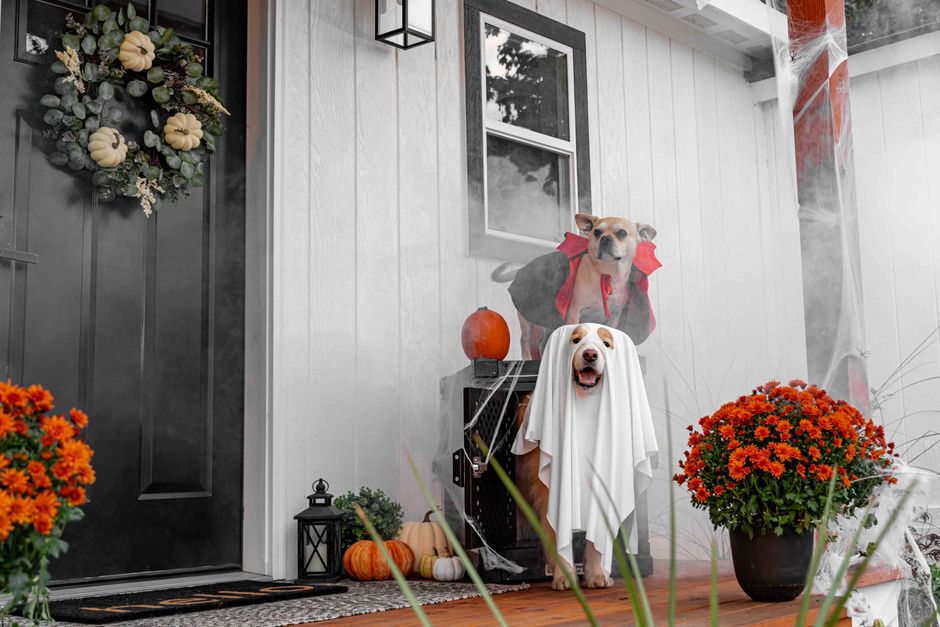
Helping your dog or cat feel comfortable during Halloween starts with preparation. If you plan to dress your pet in a costume, introduce it gradually in a calm setting before the big night. Signs that your pet is uncomfortable with their costume include refusing to move, pawing at the outfit, or showing signs of distress such as whining or flattening their ears. Always ensure any costume allows your pet to move freely, breathe comfortably, and doesn’t have small, chewable parts. For many pets, a festive collar or bandana is a less stressful option.
Candy is a highlight for trick-or-treaters, but many Halloween treats are toxic to pets. Chocolate, especially dark or baking varieties, is dangerous to both dogs and cats. Xylitol, an artificial sweetener found in some sugar-free candies and gum, can cause severe illness in dogs. Symptoms of toxicity include vomiting, diarrhea, tremors, or sudden changes in behavior. It’s important to keep all candy and wrappers out of reach, and remind children to avoid sharing treats with pets. If your dog experiences vomiting or diarrhea after Halloween, it’s important to monitor for other symptoms and seek veterinary advice if they persist. For more information on when to seek veterinary care for digestive issues, you can review our resource on when to seek veterinary care for dogs experiencing vomiting or digestive issues.
Doorbell anxiety is another common concern during Halloween. The repeated sound of the doorbell or knocking can be stressful, especially for pets that are sensitive to noise or unfamiliar visitors. Signs of anxiety may include barking, running to the door, hiding, or trying to escape. Creating a safe, quiet room away from the front door with your pet’s favorite toys, bed, and some background noise like a radio or white noise machine can help minimize stress. For cats, providing an enclosed hiding spot such as a covered bed or cardboard box can offer extra comfort. If your cat starts hiding or refuses to eat during or after Halloween, it’s important to watch for ongoing symptoms and consult your veterinarian. More information about these warning signs can be found in our guide on signs that a cat may need veterinary attention when hiding or refusing food.
Simple Ways to Prevent Halloween Accidents at Home
Preventive steps can make all the difference in keeping your pet safe during Halloween. Before festivities begin, walk your dog earlier in the evening to avoid the busiest trick-or-treat hours. Keep all candy, decorations, and candles out of reach of curious noses and paws. If you have a cat that likes to dart outside, consider keeping them in a secure room during peak activity. Remind family members and guests not to let pets sneak out when opening the door. Using baby gates or leashes indoors can provide an extra layer of security for dogs that get overexcited or anxious. For pets that are especially sensitive to loud noises or crowds, playing calming music or using pheromone diffusers may help create a more relaxing environment. Always check that your pet’s identification tags and microchip information are up to date in case of accidental escapes.
When to Contact Your Veterinarian During Halloween
While many Halloween mishaps can be prevented with planning, it’s important to know when to seek professional veterinary care. Immediate veterinary attention is needed if your pet ingests chocolate, xylitol-containing treats, or any unknown substances. Signs that your dog or cat needs urgent care include persistent vomiting, diarrhea, tremors, difficulty breathing, or sudden changes in behavior such as extreme lethargy or unresponsiveness. If your cat is hiding excessively or refusing to eat for more than 24 hours, this may indicate stress or an underlying health issue that requires evaluation. Our veterinary team at Bradley Hills Animal Hospital is here to answer your questions and provide prompt care if your pet experiences any health issues related to Halloween festivities. Scheduling a comprehensive pet exam can help address concerns early and keep your pet healthy through the holiday season.
Keeping the Halloween Spirit Safe for Your Dog or Cat
Halloween can be a fun and memorable occasion for the whole family, but a little preparation goes a long way in ensuring your dog or cat feels comfortable and stays safe. By recognizing signs of stress, keeping hazardous treats out of reach, and creating a secure environment, you can help your pet avoid common holiday hazards. If you notice any changes in your pet’s behavior, appetite, or health, or if you have concerns about costumes or party plans, our veterinarians are here to help. Schedule an appointment with Bradley Hills Animal Hospital at 7210 Bradley Blvd, Bethesda, MD 20817 or give us a call at (301) 365-5448 for expert advice and compassionate care. When searching for a vet near me, trust our experienced veterinary team to support your pet’s health and happiness during every season in Bethesda and the surrounding communities. For ongoing support, preventive care, and answers to your Halloween questions, we look forward to partnering with you and your pet all year long.